How can you tell whether you might need a new roof? There are several signs to look for, although not every problem means the whole roof must be replaced. If the rest of the roof is sound, a repair may be enough. A high-resolution photograph taken safely from the street can help you inspect the roof in more detail. Do not climb onto the roof yourself. We have the equipment and experience to inspect it safely.
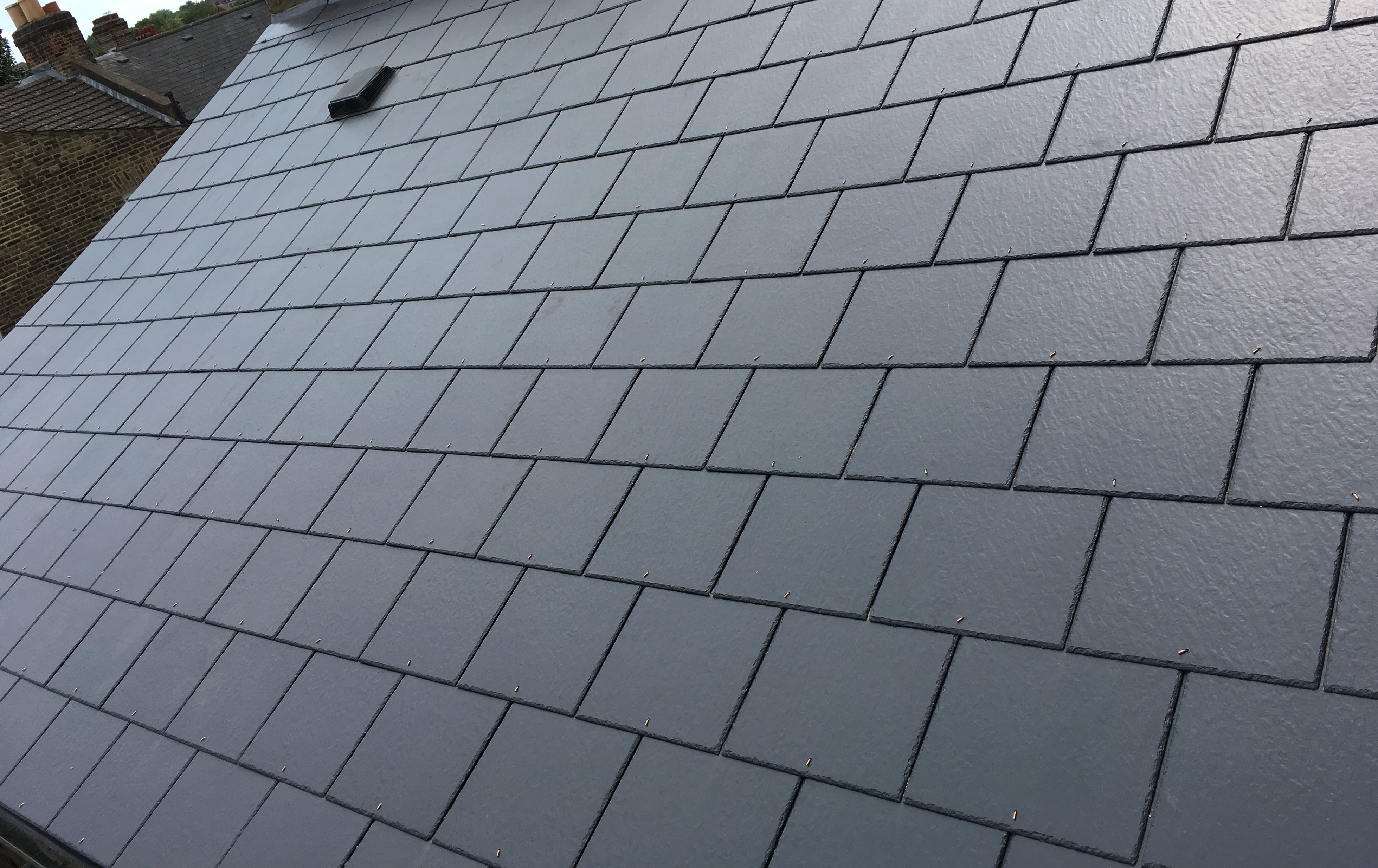
New roof in composite slate Kellet Road
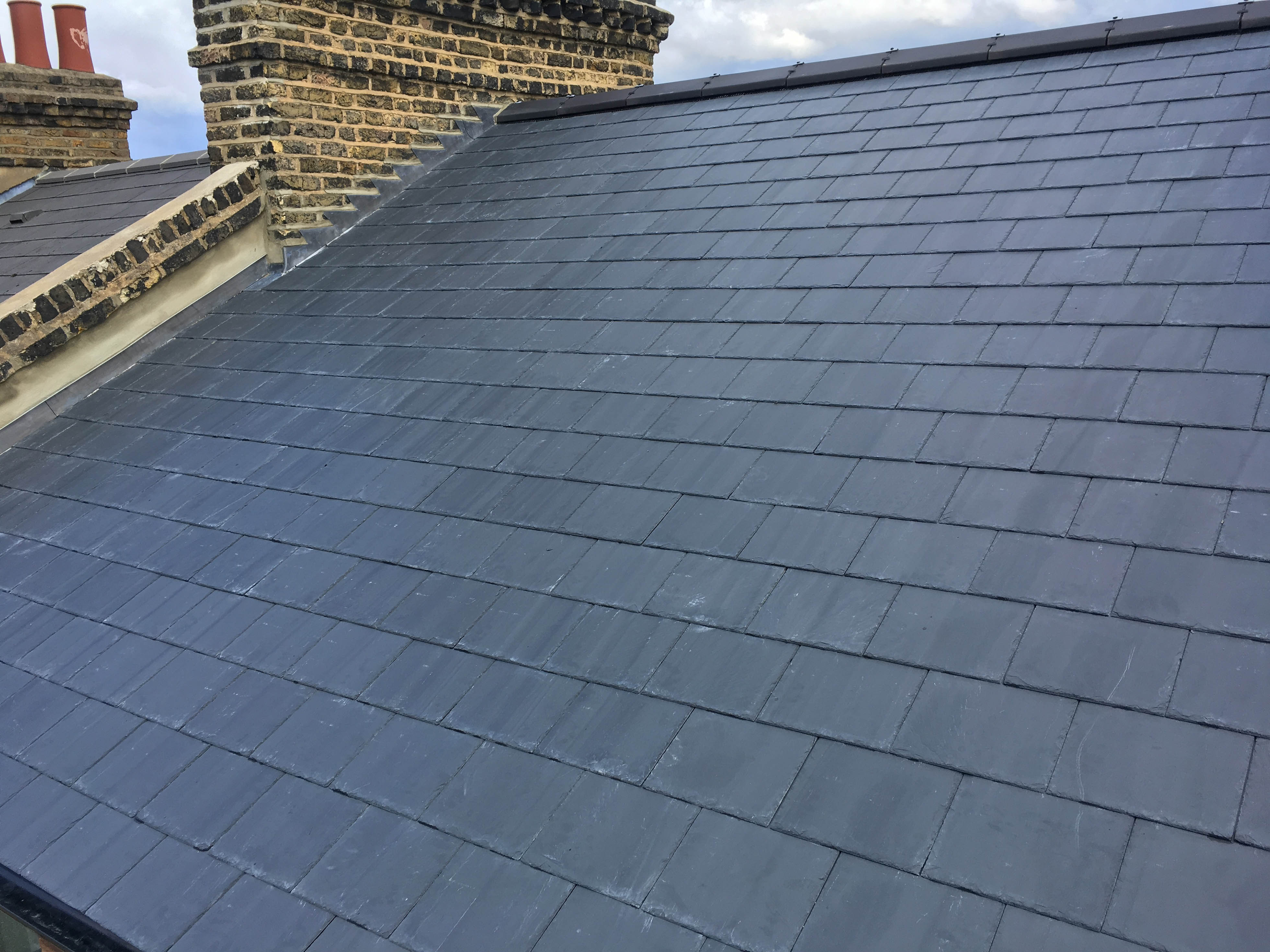
New roof in natural Canadian Glendyne slate
On a flat roof, look for standing water or poor drainage. Inside the property, damp or discoloured patches on an upper ceiling may be the first sign of a leak. Do not ignore them: the cause could be a loose or missing tile, damaged felt or a more serious fault.
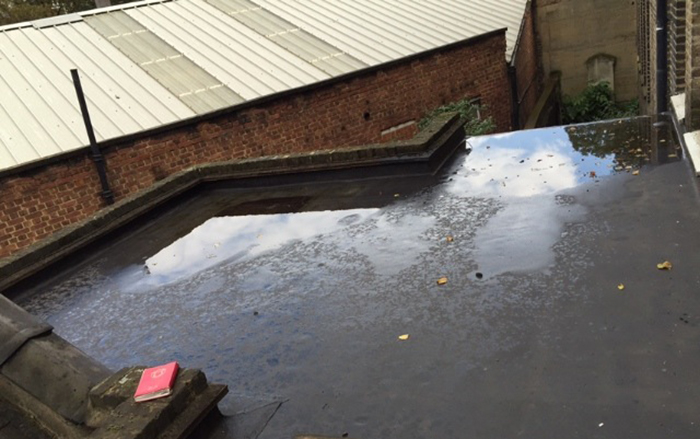

Flat roof pooling water in need of repair
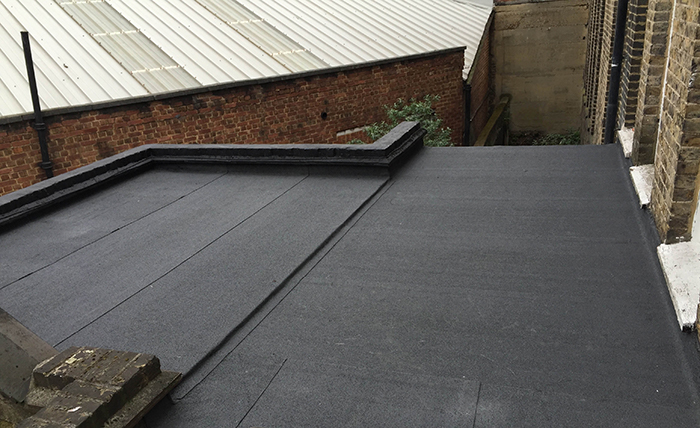

We rebuilt it so it no longer pooled water
If you can enter the loft safely, look for daylight through the roof covering, water marks or patches of mould. These signs should not be ignored, as a small leak can become harder to repair once damp has spread. In the example below, we formed a new upstand, reboarded the rear section and re-felted the whole area with a high-tensile material.
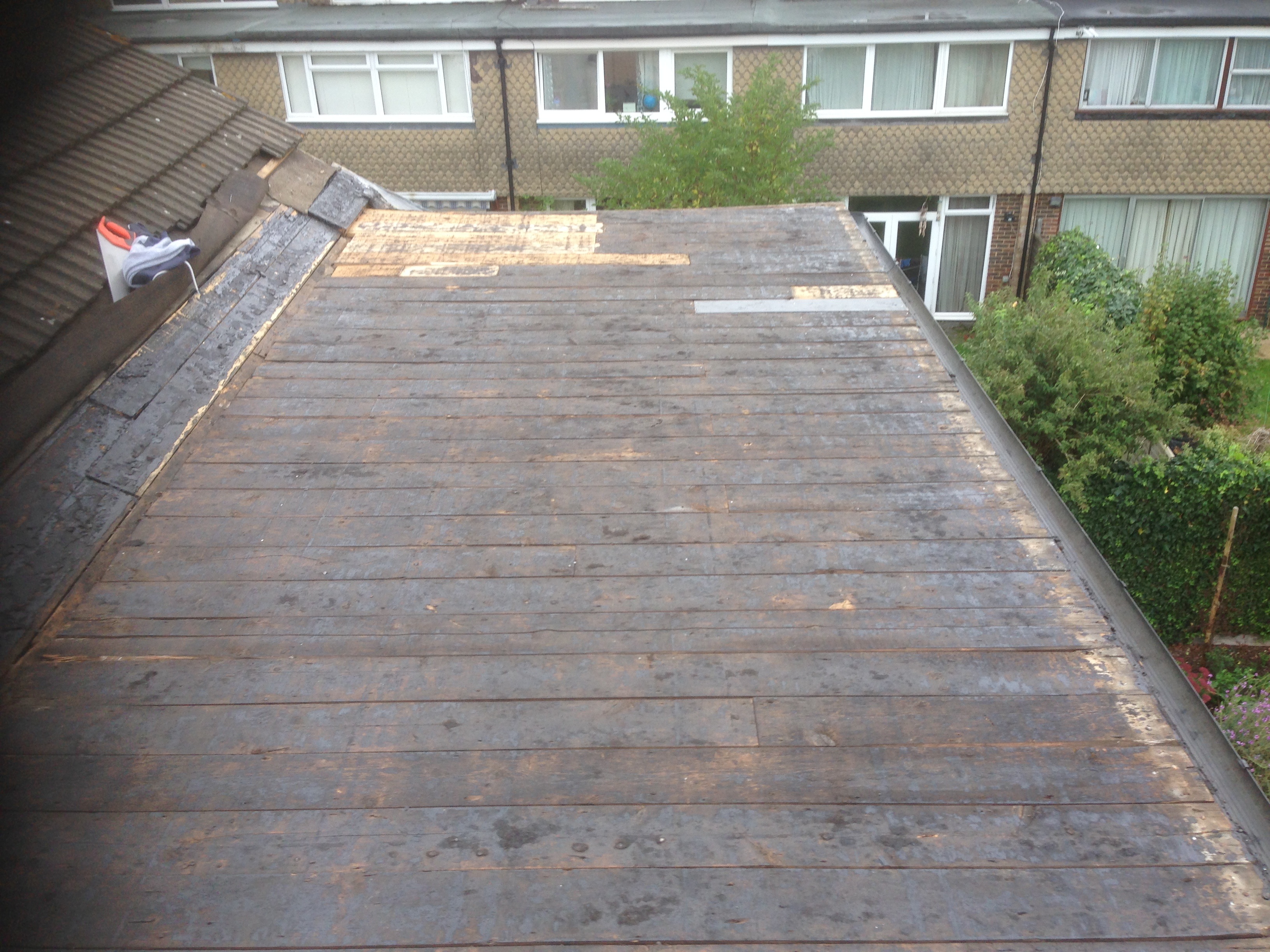
Flat roof cracked
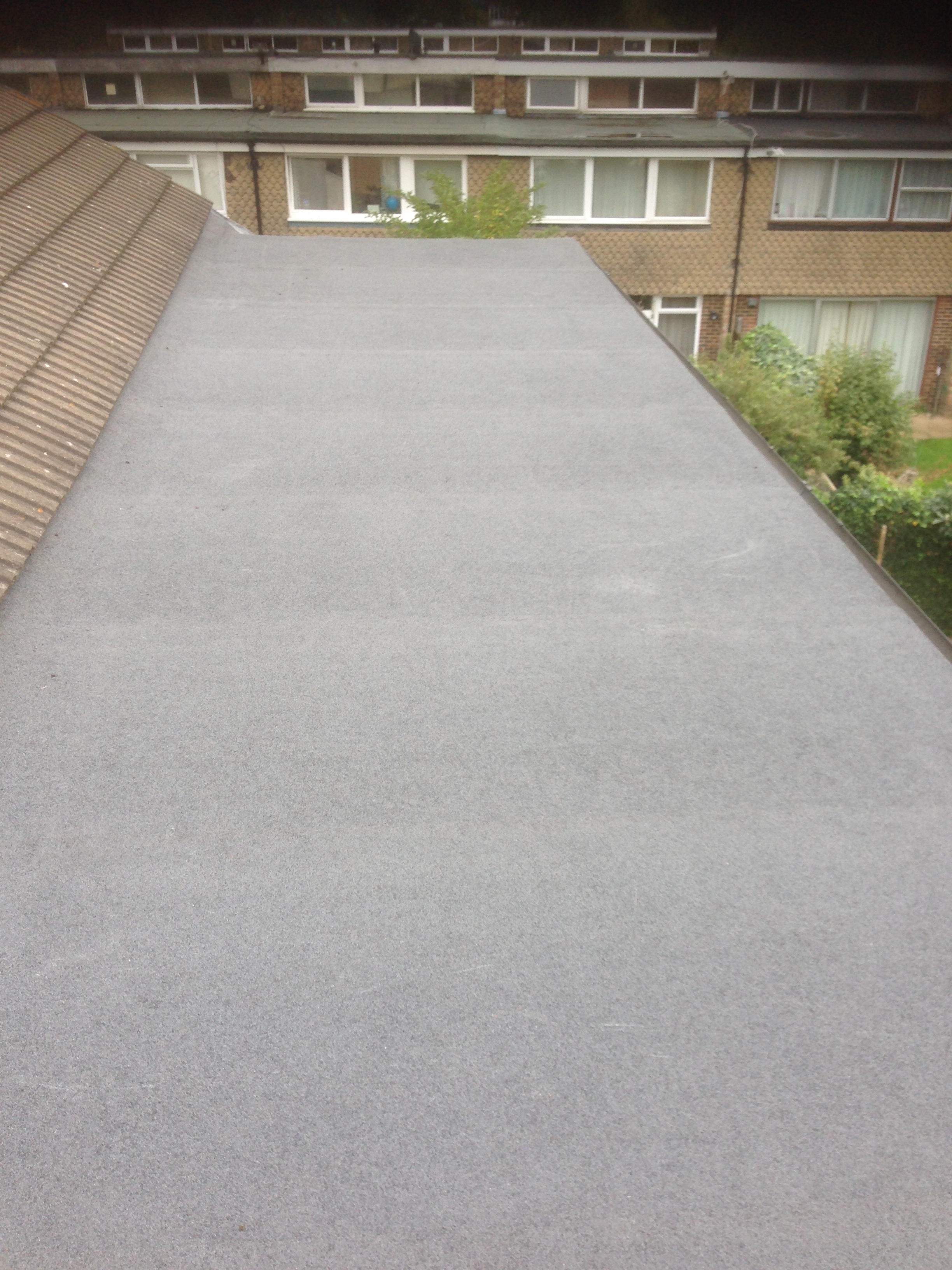
Flat roof repaired
Look for slipped or missing tiles. Water entering through these gaps can damage roof timbers and lead to damp or rot. A few missing tiles may be straightforward to repair, but on a very old roof they can also indicate widespread nail fatigue. We will tell you plainly whether a repair is sufficient or a larger replacement is needed.

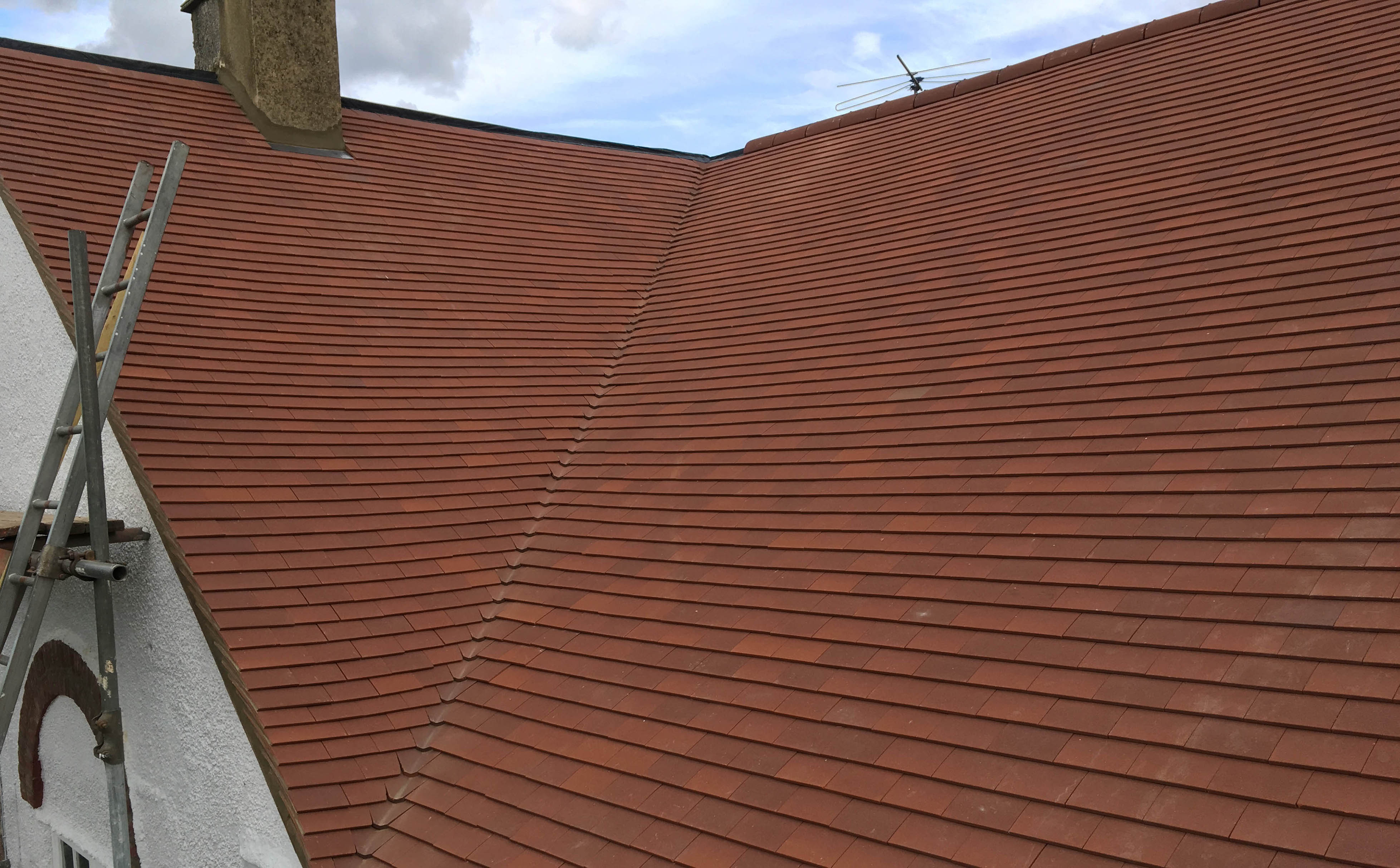
Check for widespread moss, mould or deterioration. A small affected area may need only a repair, but extensive deterioration can indicate that the roof is nearing the end of its life. In the example below, internal leaks revealed that the old composite slates had softened and eroded, while nail fatigue was allowing them to slip.
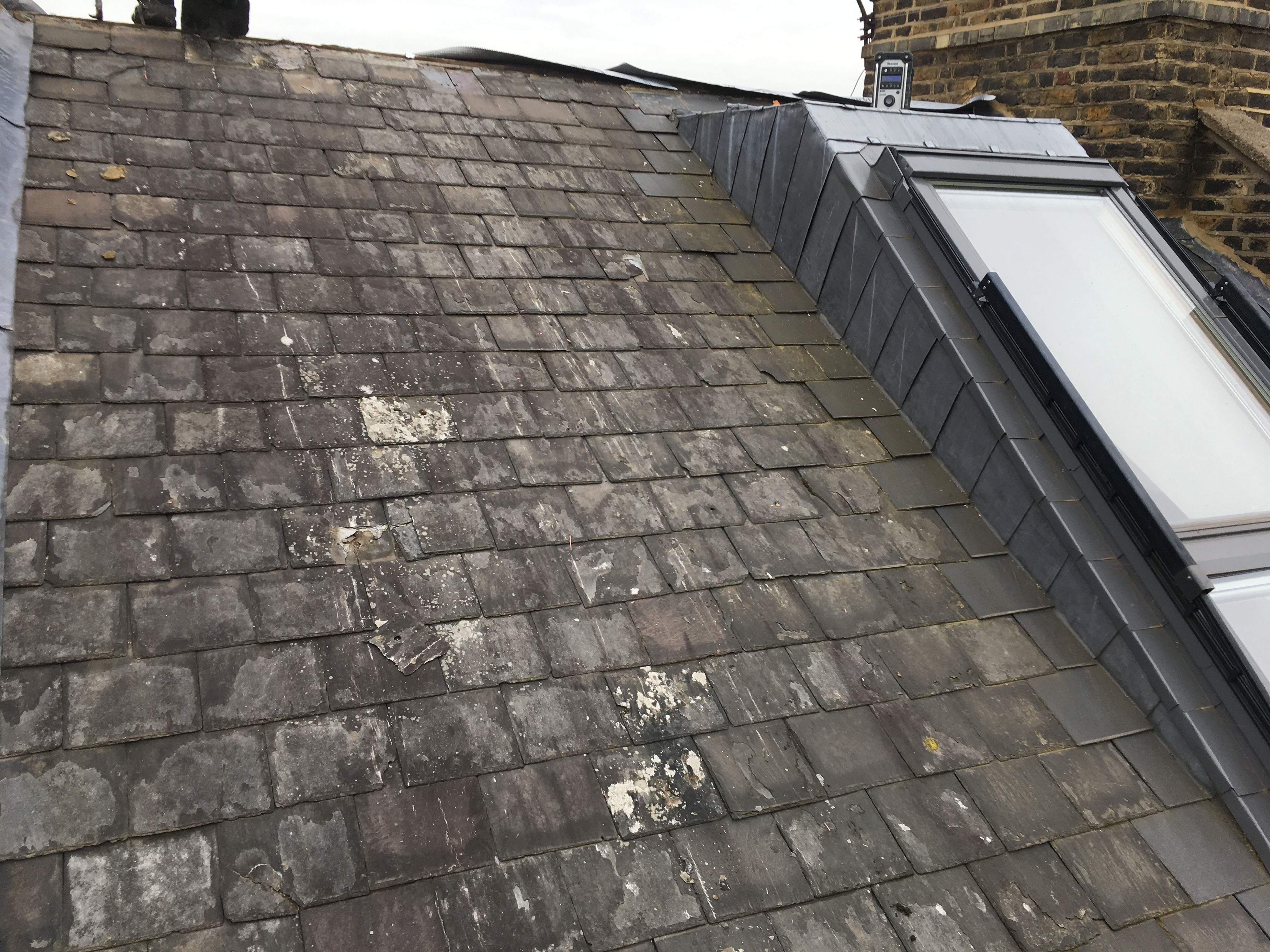
An old composite slate roof at the end of its useful life
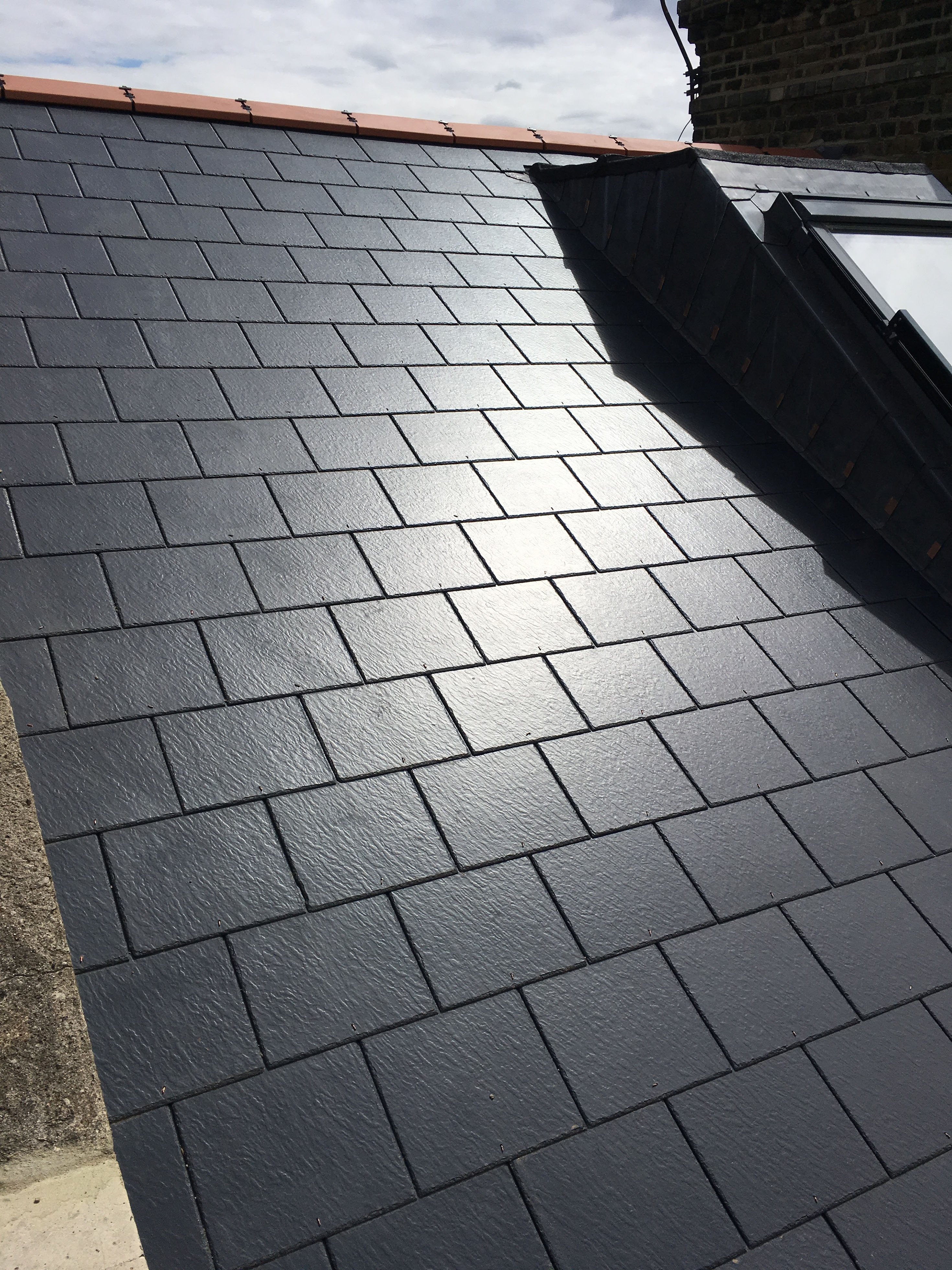
Roof renewed in composite slate
Look at the ridge along the top of the roof. It should appear straight. If it sags in the middle, call us, as this can indicate a structural problem that needs prompt attention.
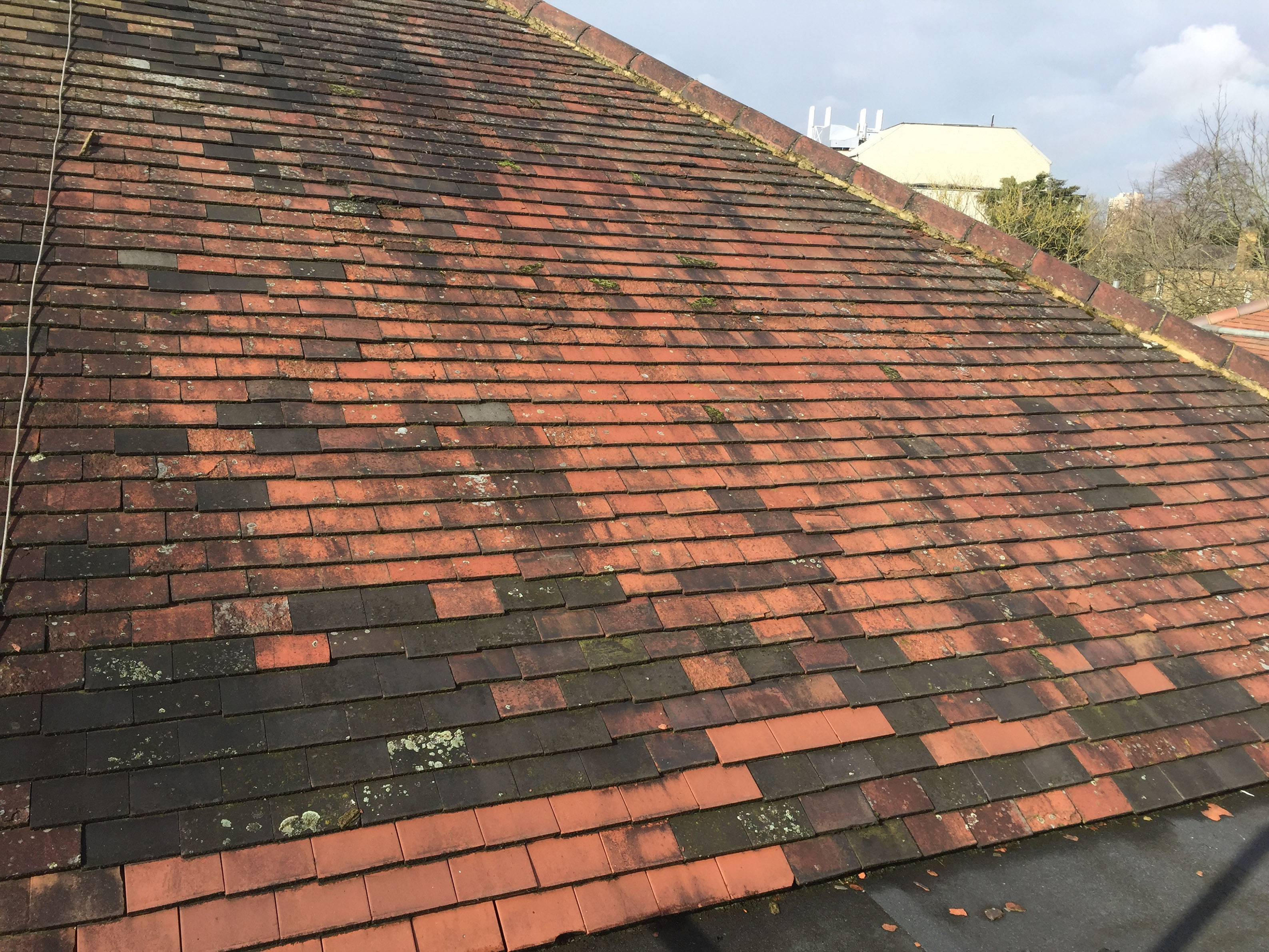
Plain tiled roof in need of repair
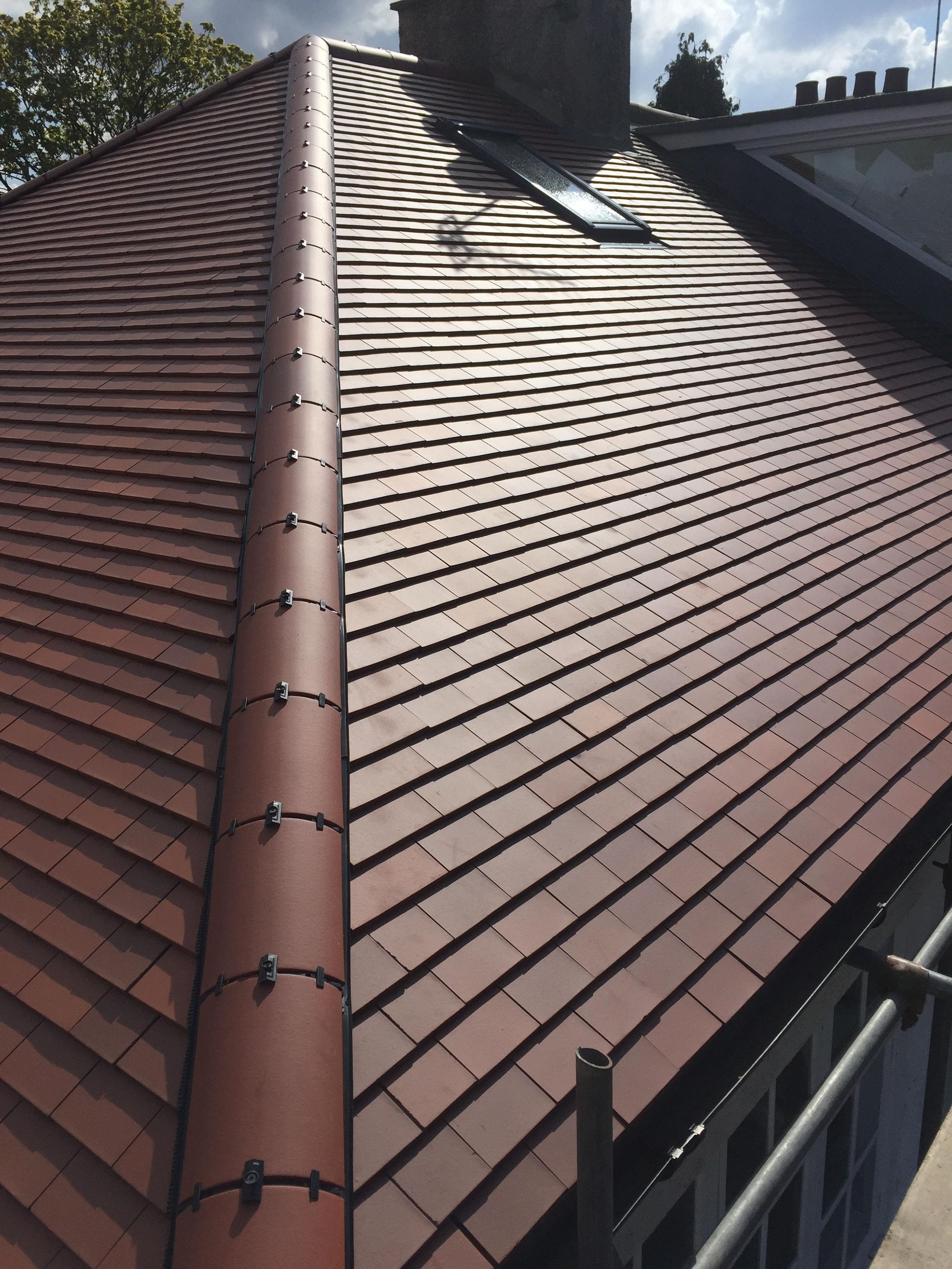
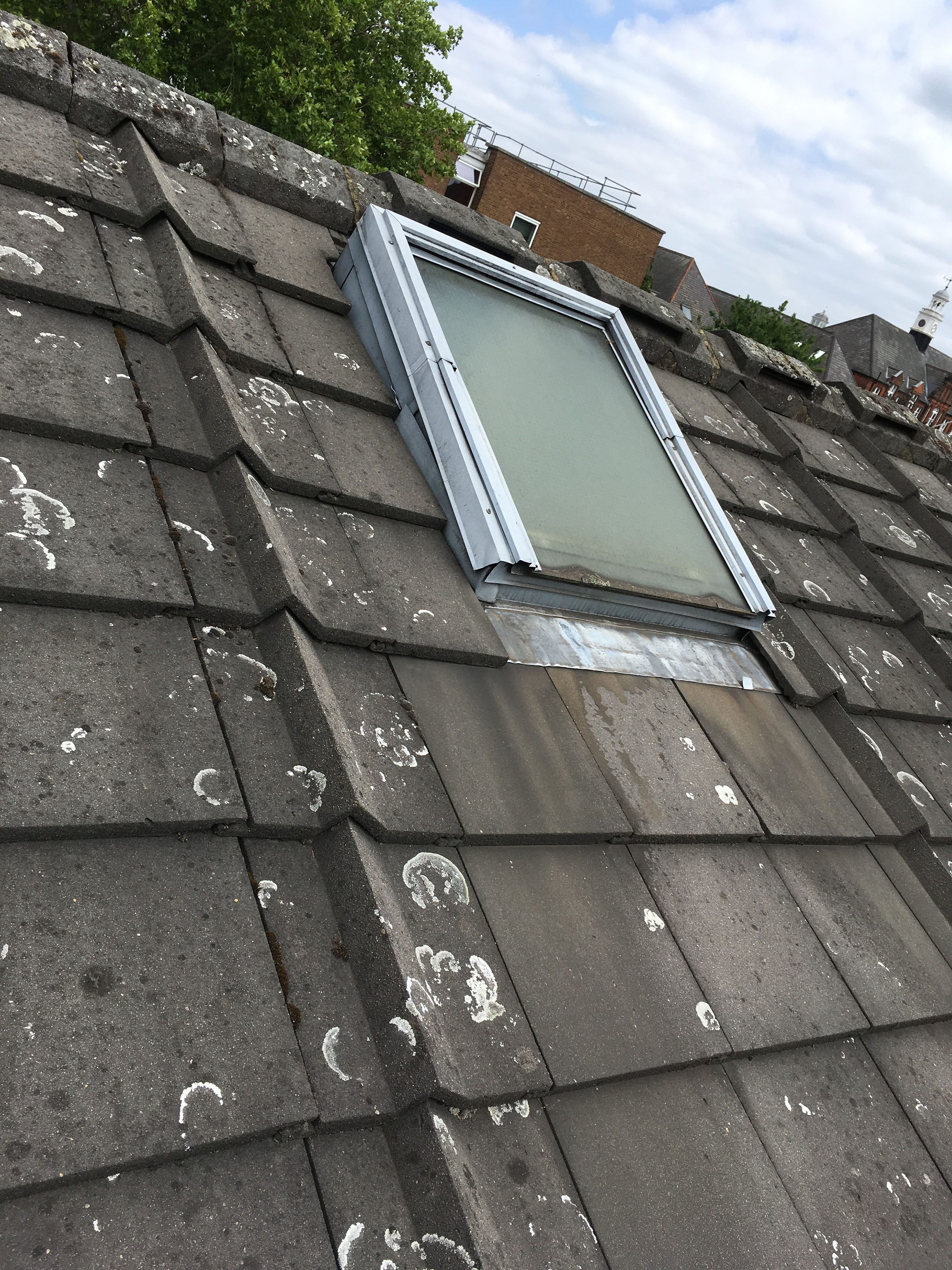
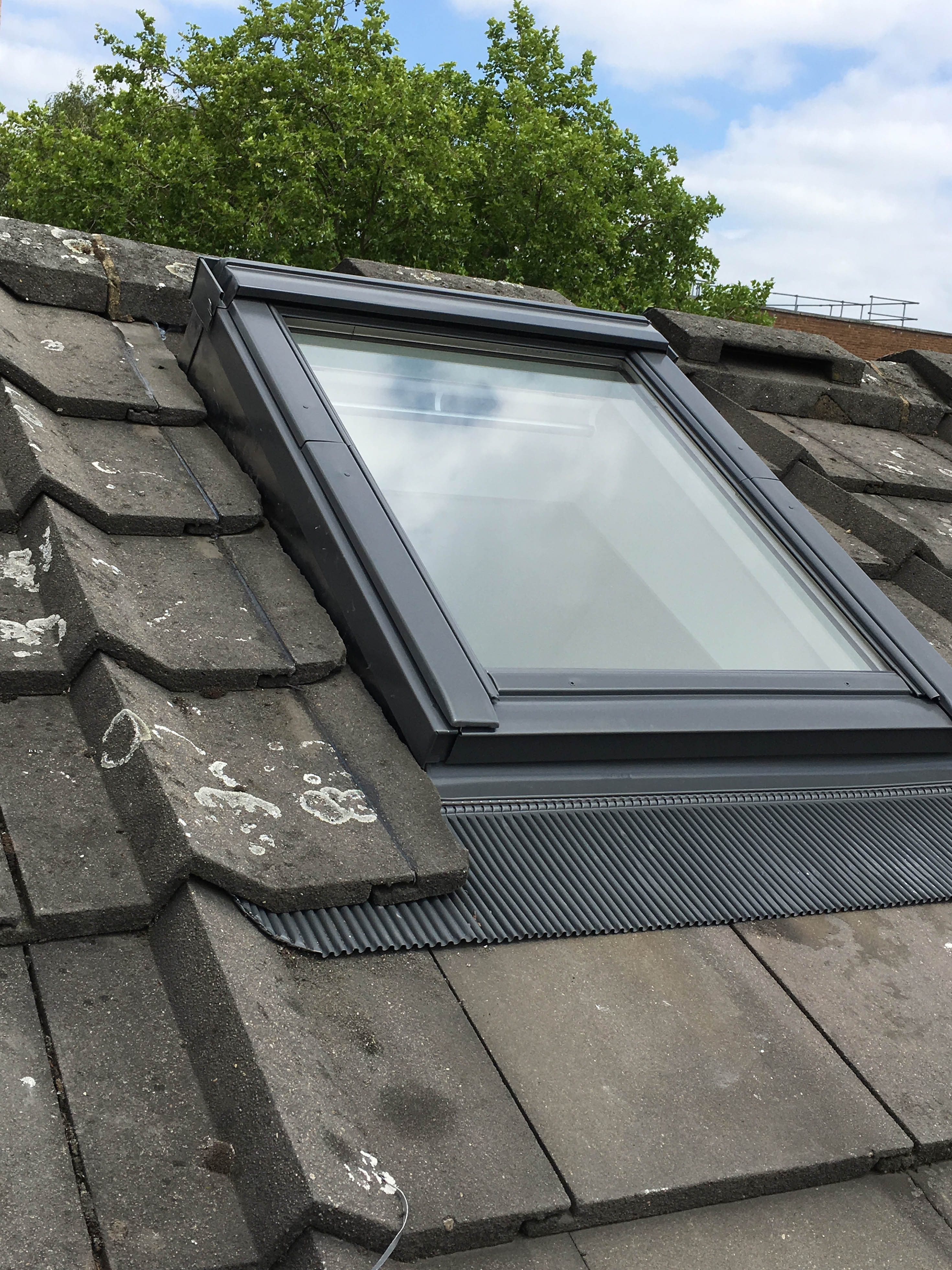
New roof showing the new VELUX window
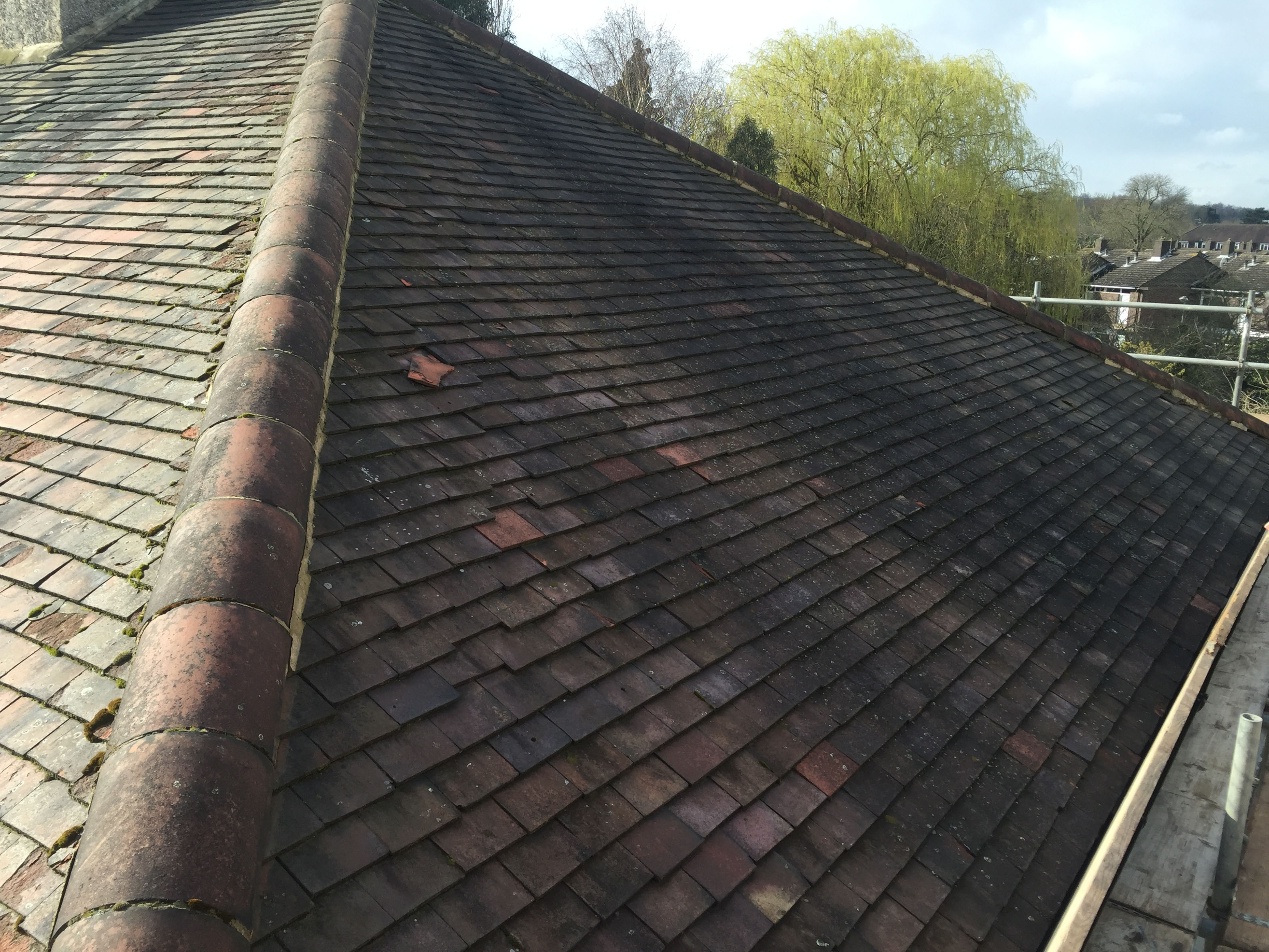
Broken and slipping tiles on a clay roof

Please note we put our own scaffolding in place
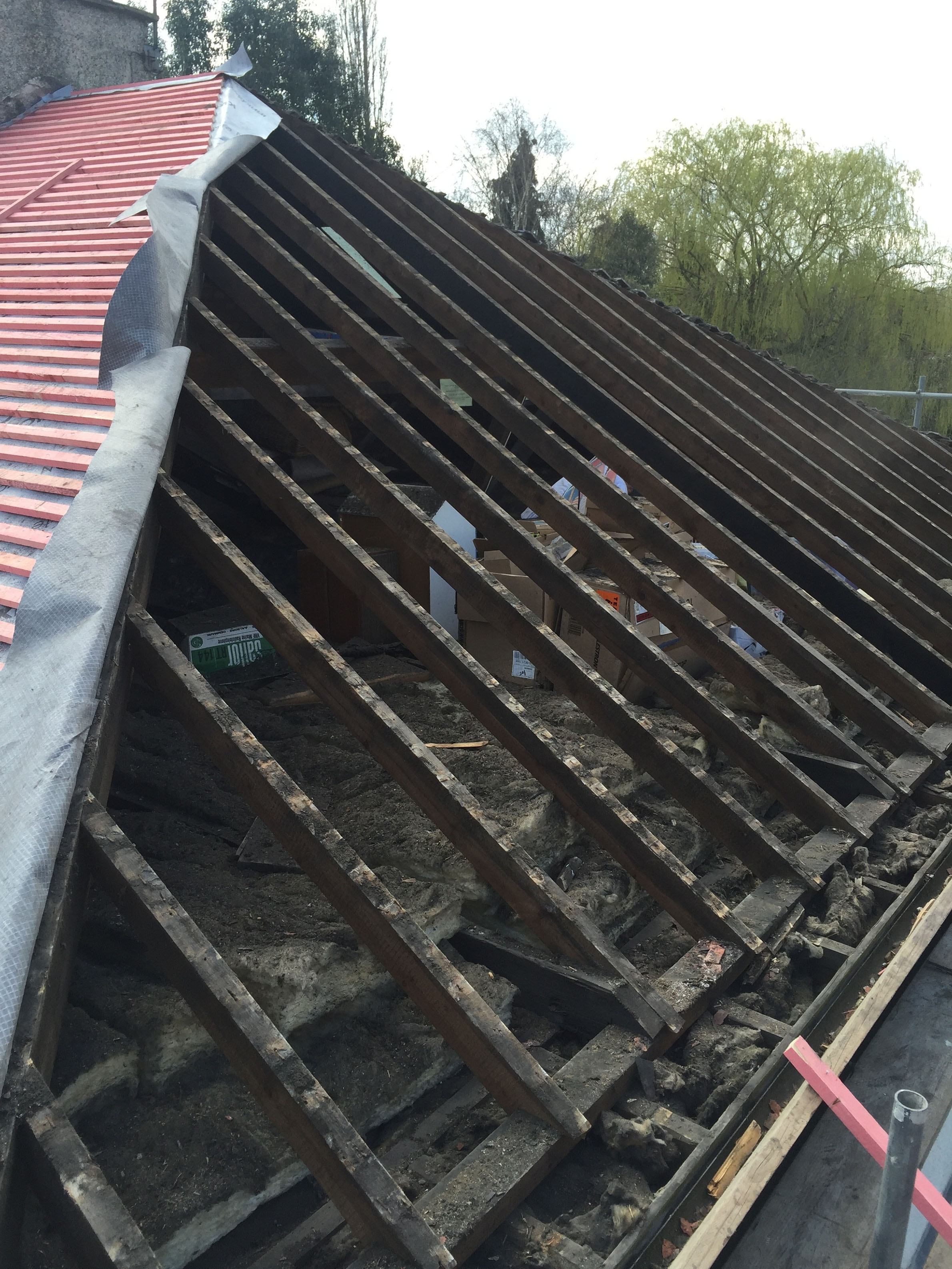
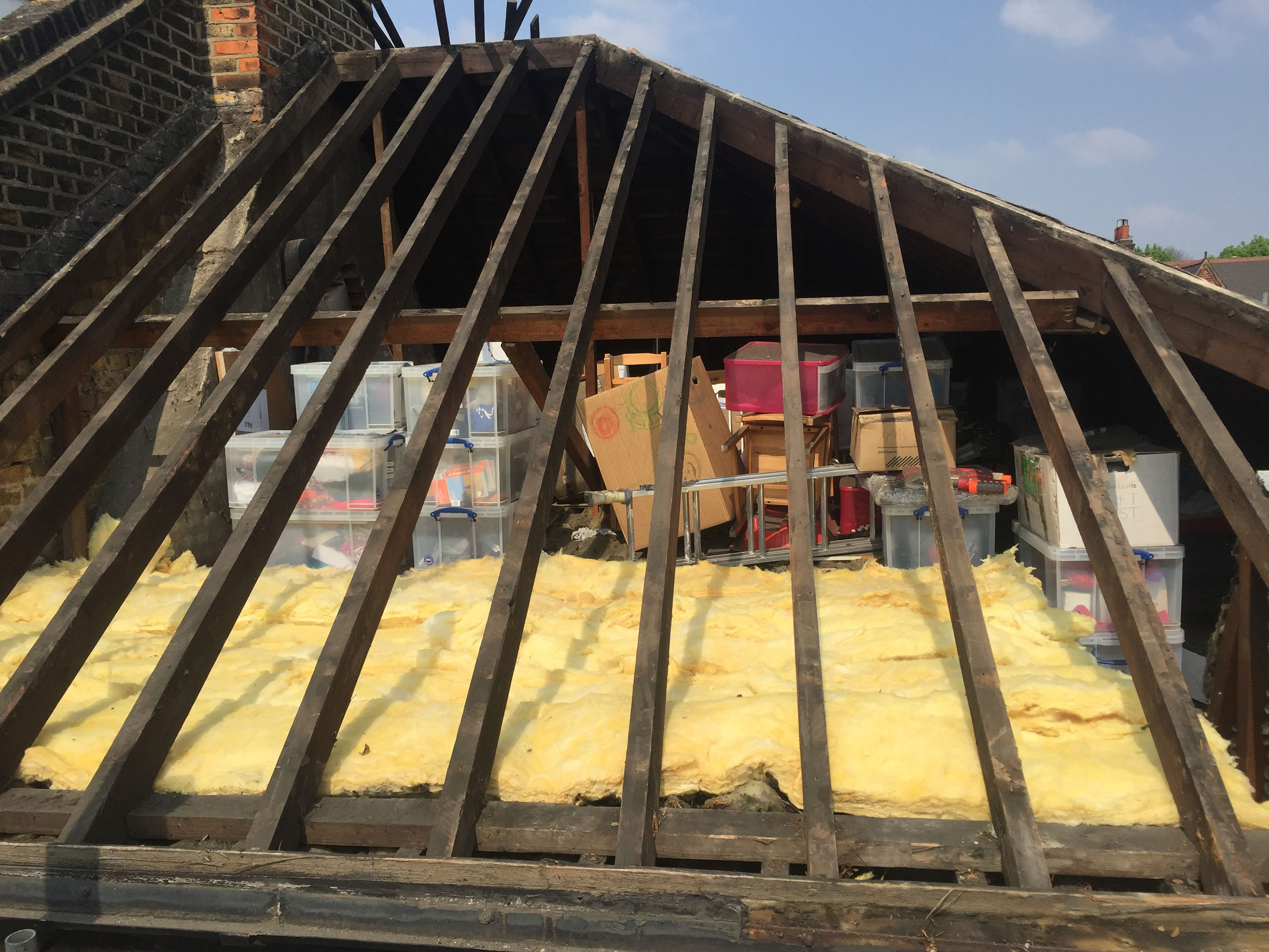
Stripping a roof back to repair it
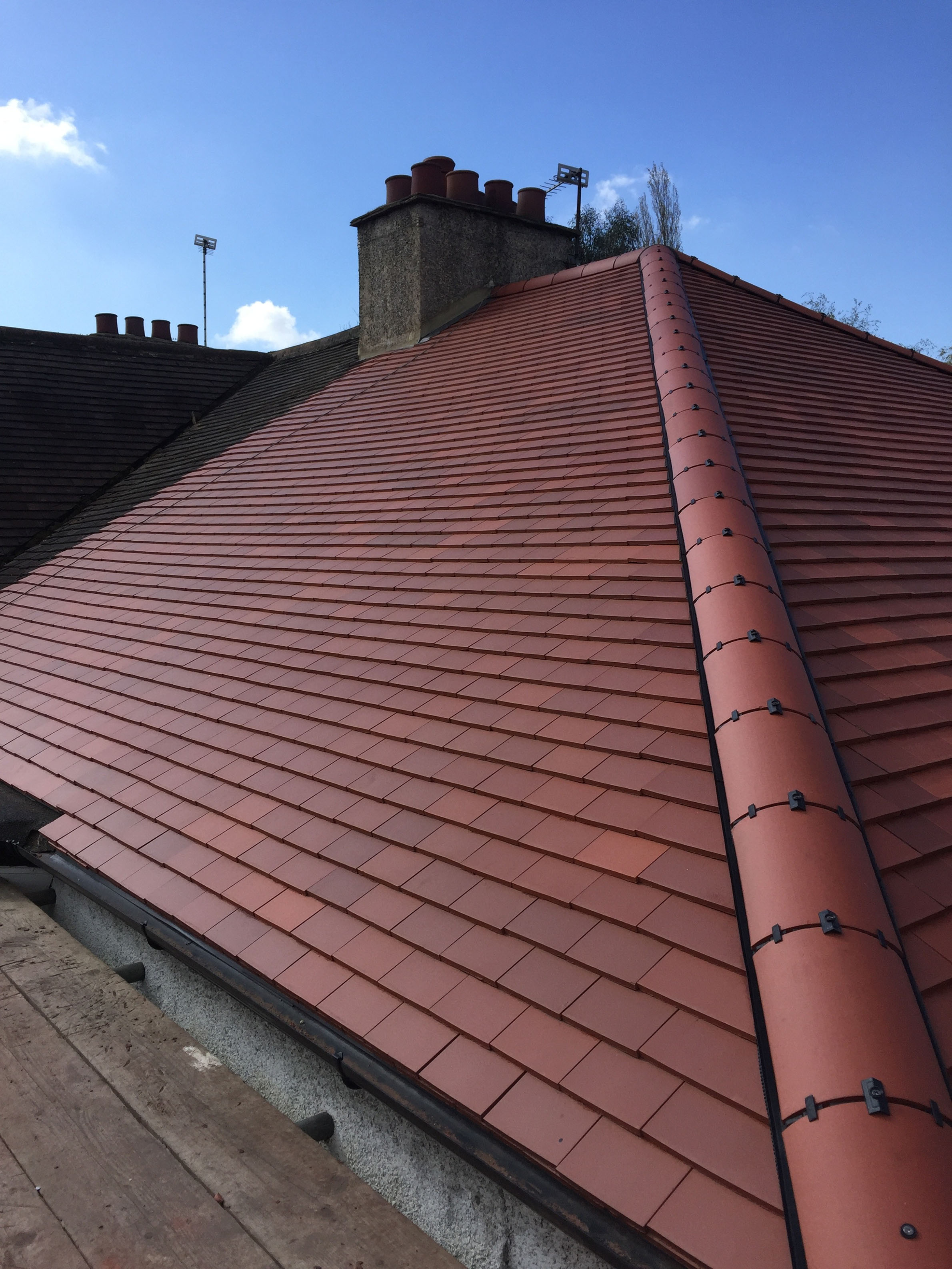
Finished view of the new roof from the front
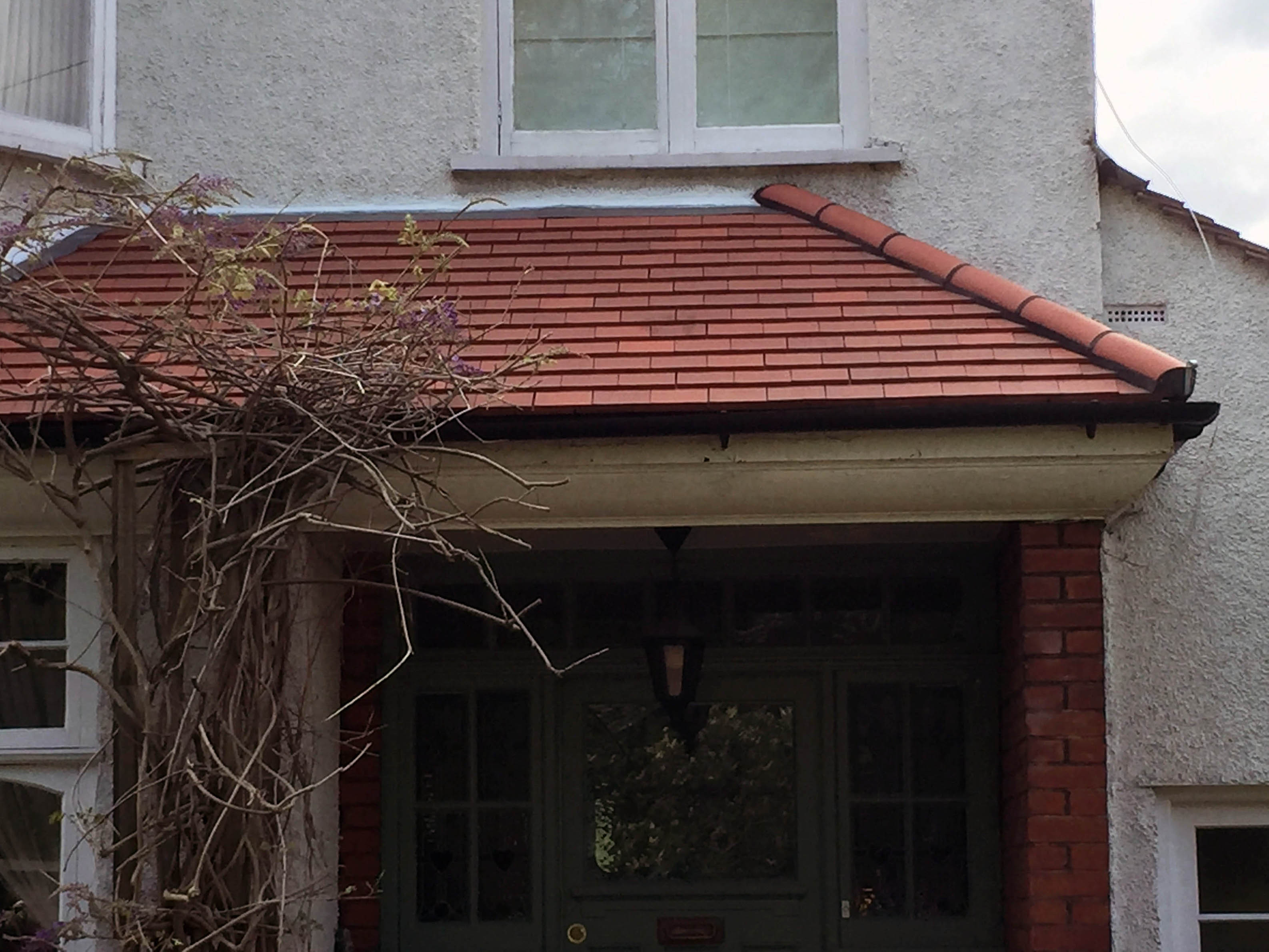
We also replaced the front bay tiles to perfectly match
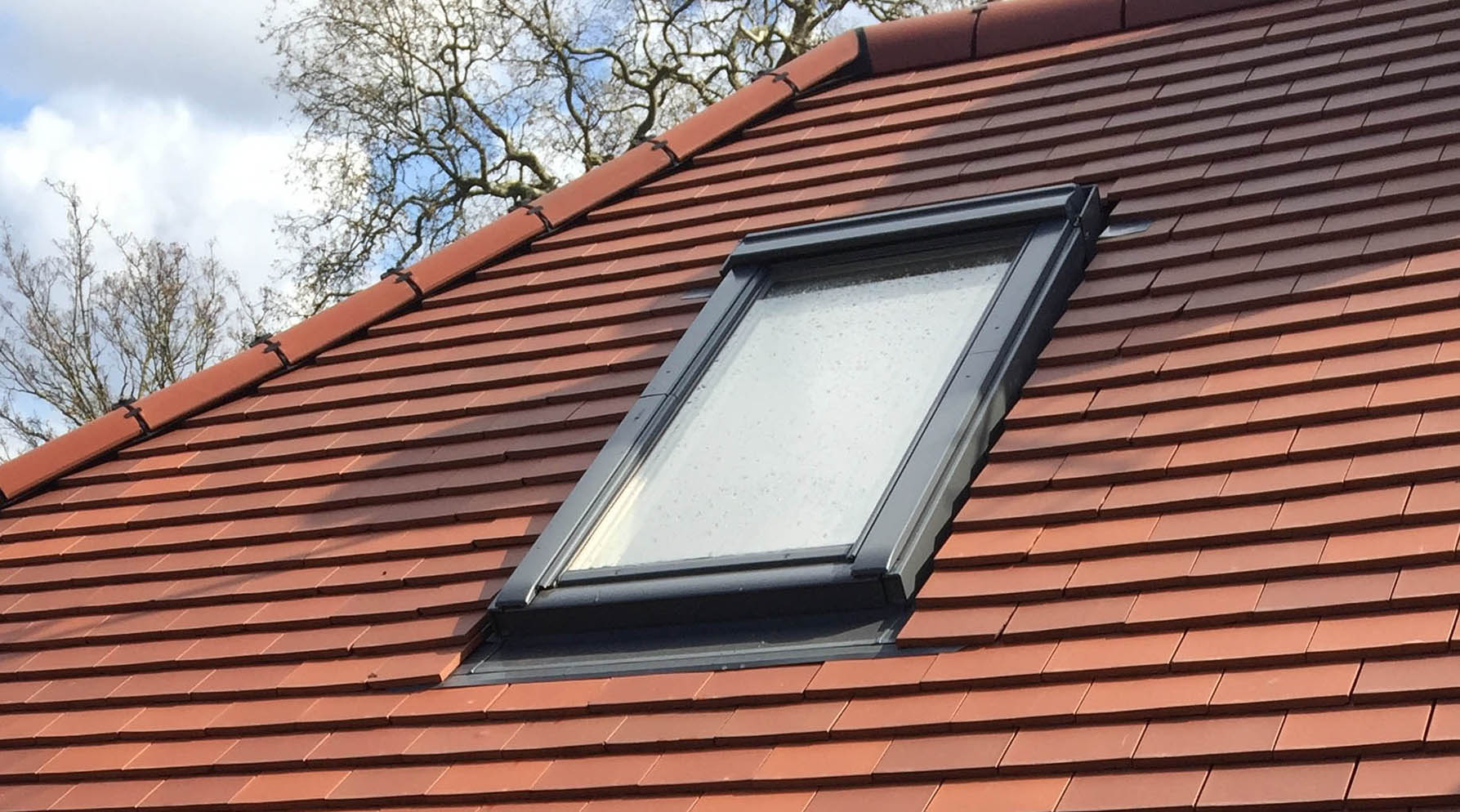
Showing the new VELUX window in detail
Zoom in on the metalwork where the roof meets brickwork. These pieces are called flashings. If a flashing has slipped, pulled away or left a gap, call us. The problem can often be repaired quickly if it is dealt with early.
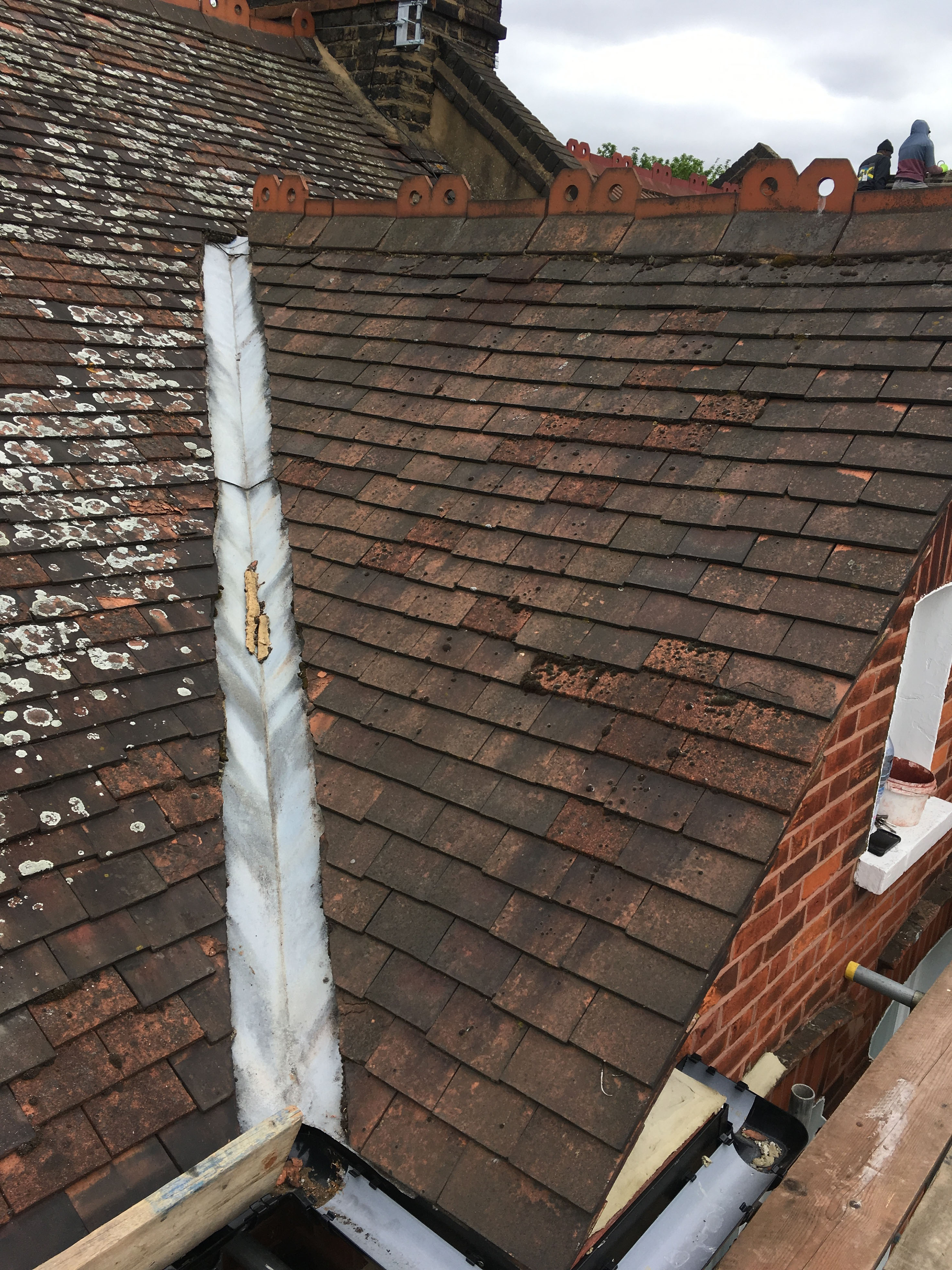
Weathered slates and split valleys

Showing new plain tiles in place
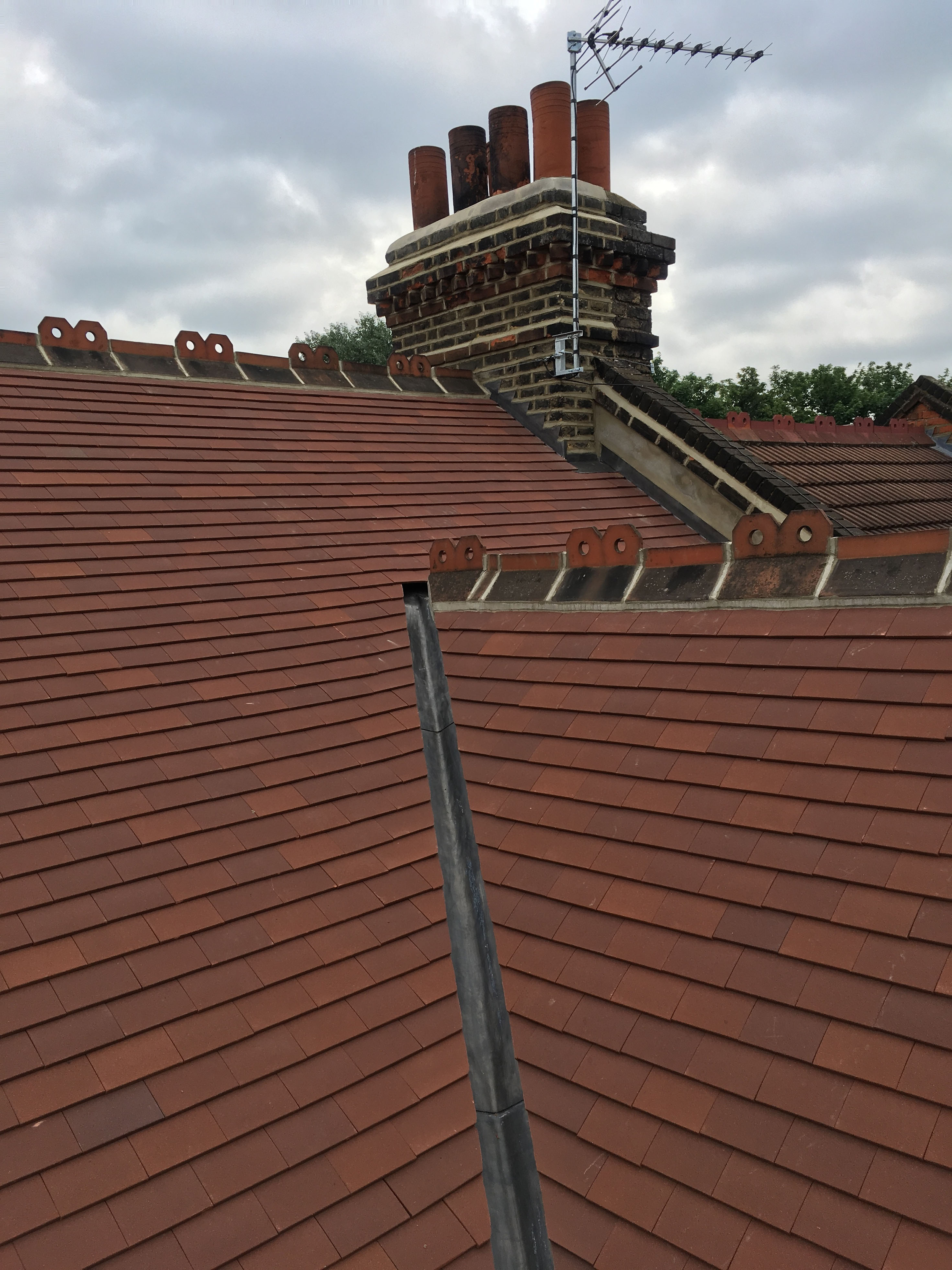
New plain tiles
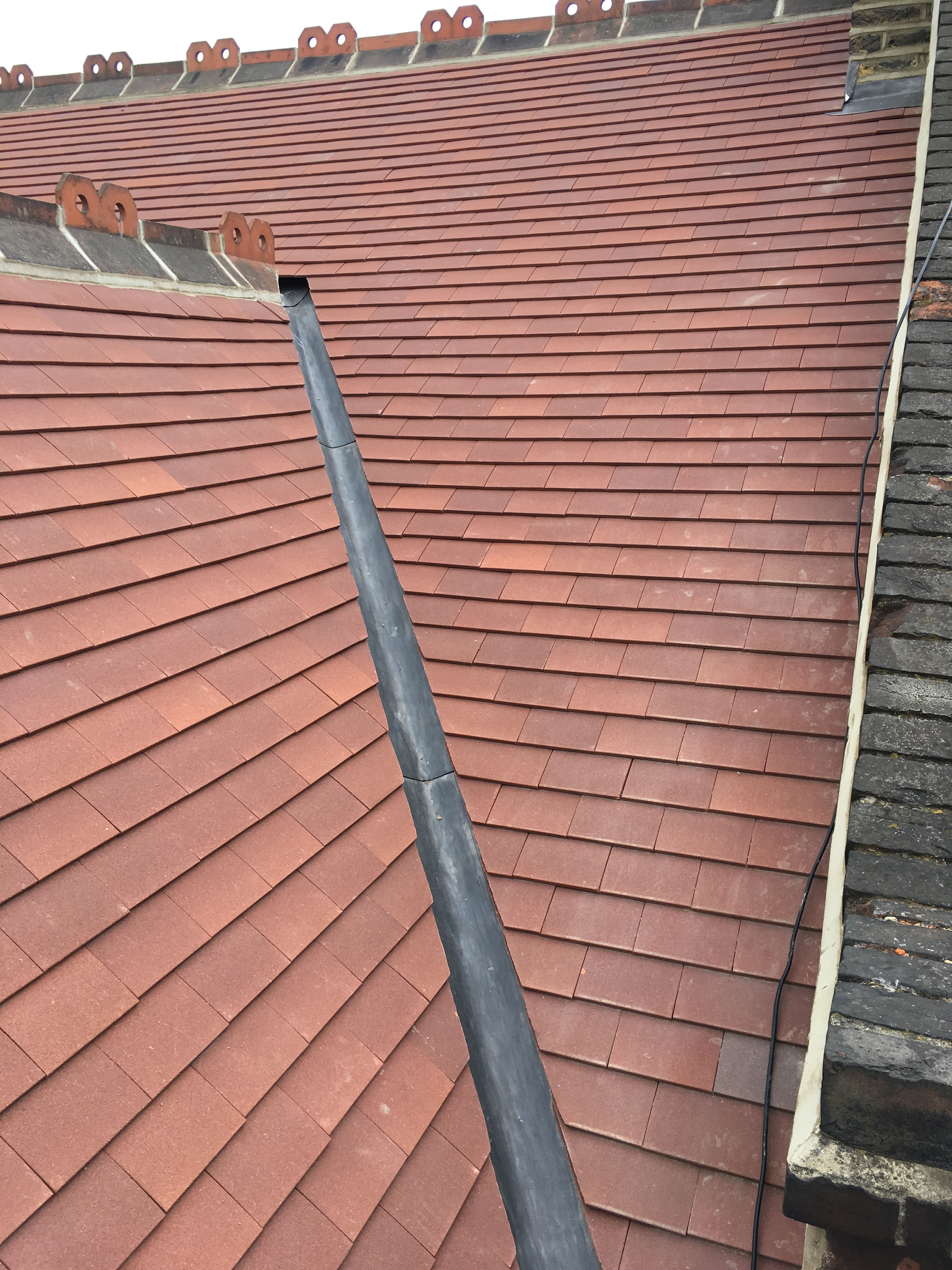
New interlocking tiles and lead flashing in place
Check the brickwork around ridges, party walls and chimneys. Missing pieces, cracks or a visible lean all need attention. We repair the brickwork, pointing and render in these areas.
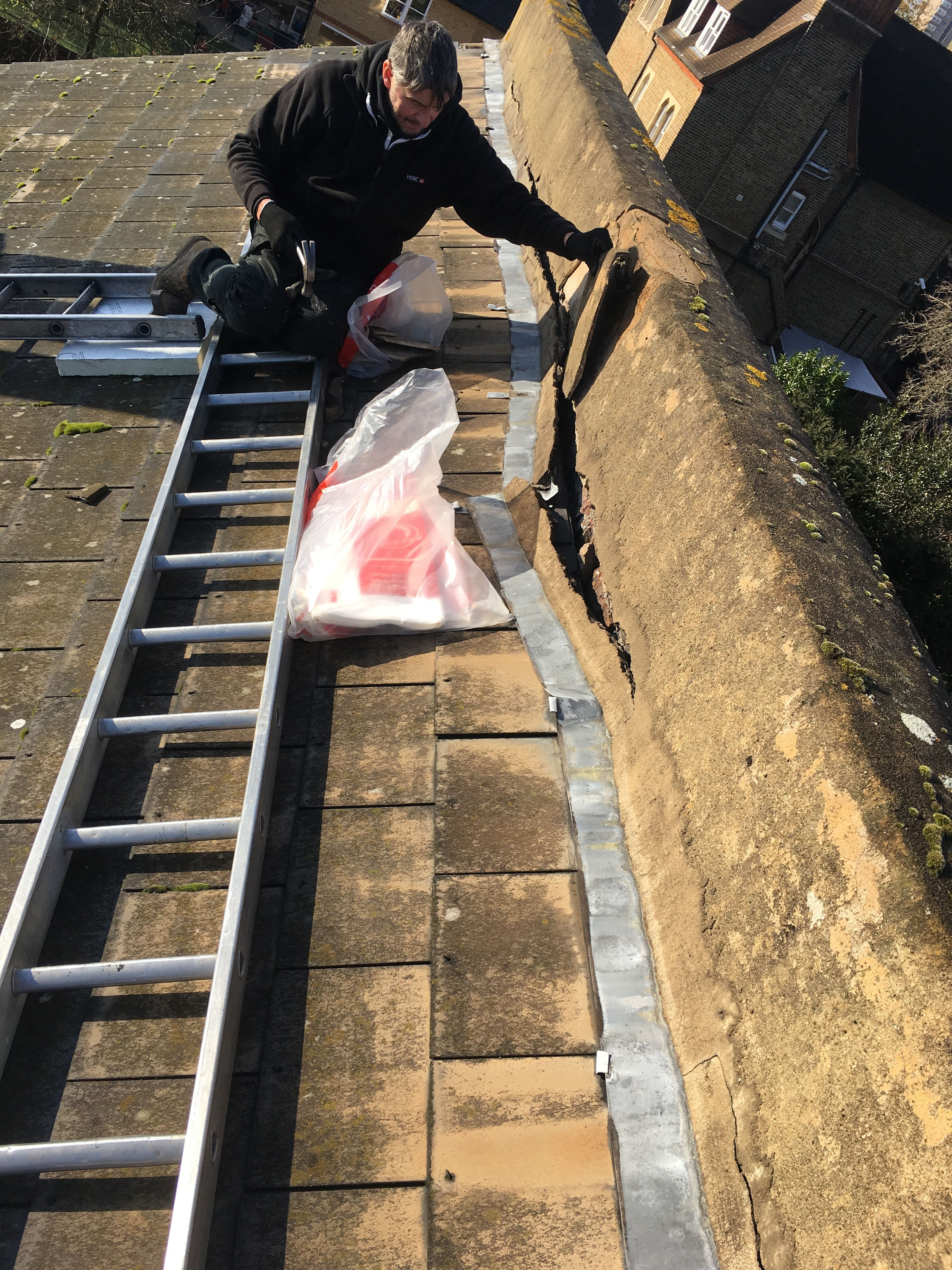
Cracked walls and flashings
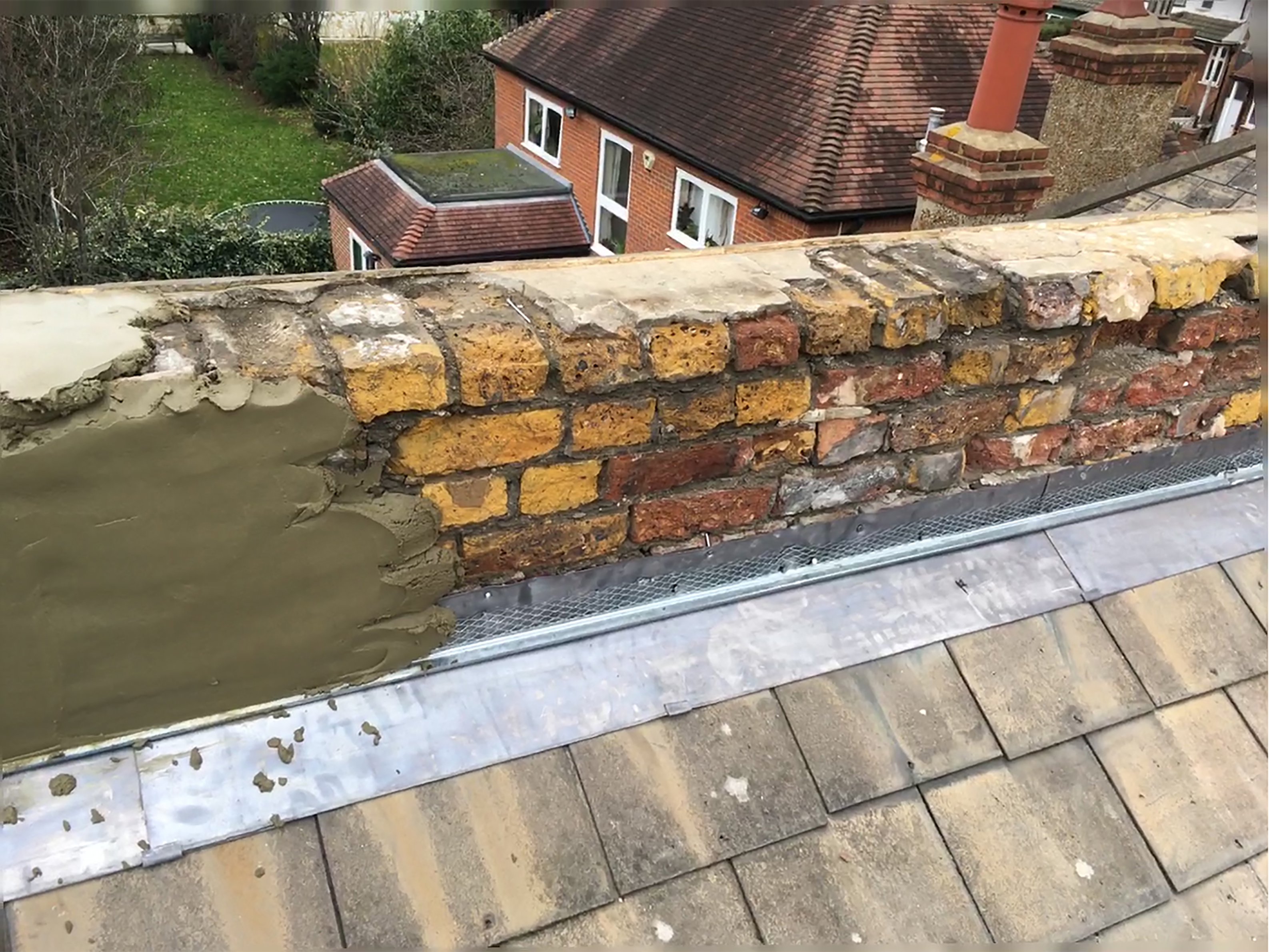
Wall during repair
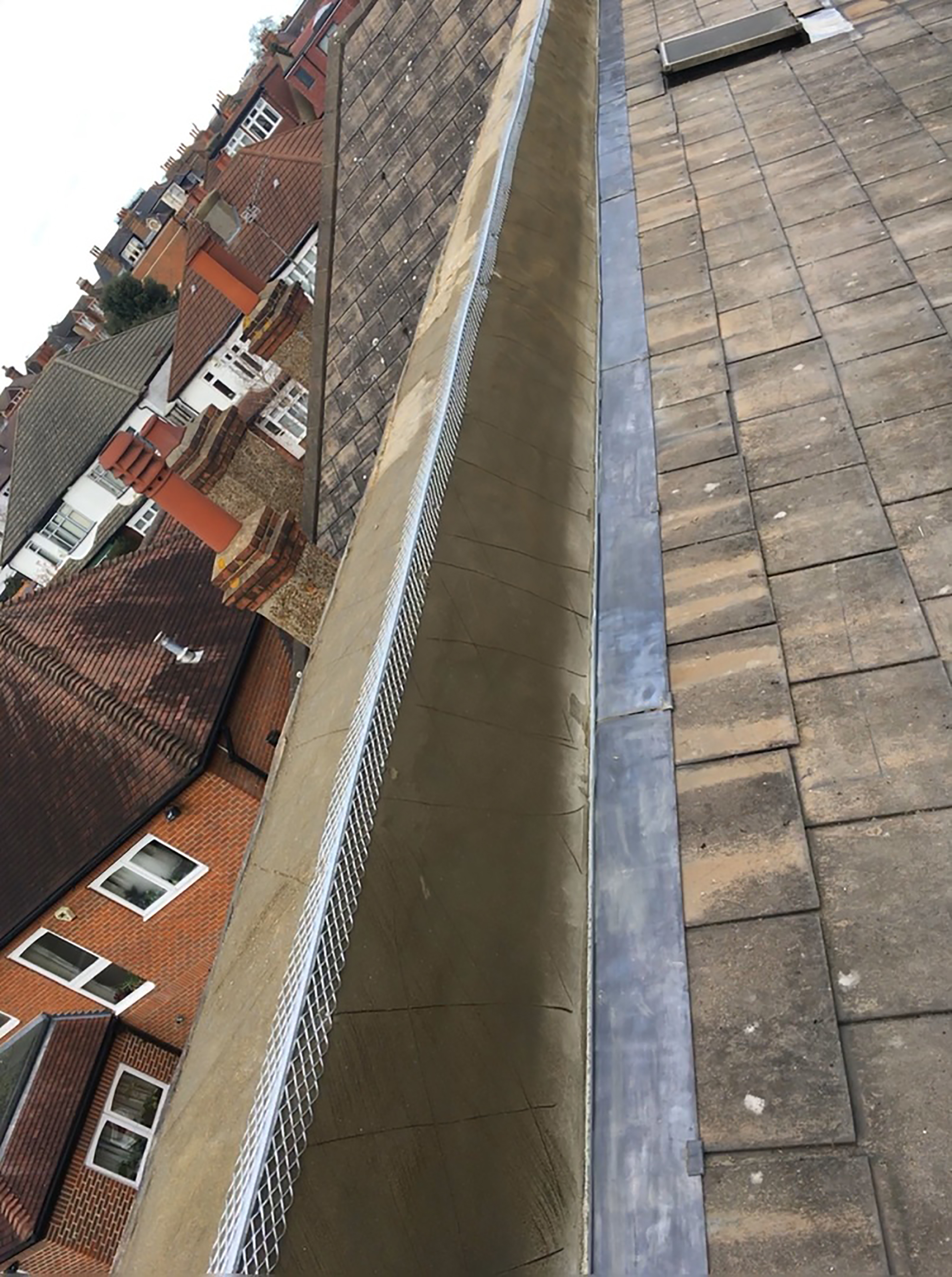
Wall during repair

Wall fully repaired
From a safe upper window, check whether pieces of brick or tile have collected in the gutters. This can be a sign of damage higher up. Loose or missing guttering should also be repaired, as water running down the outside wall can eventually cause internal damp.
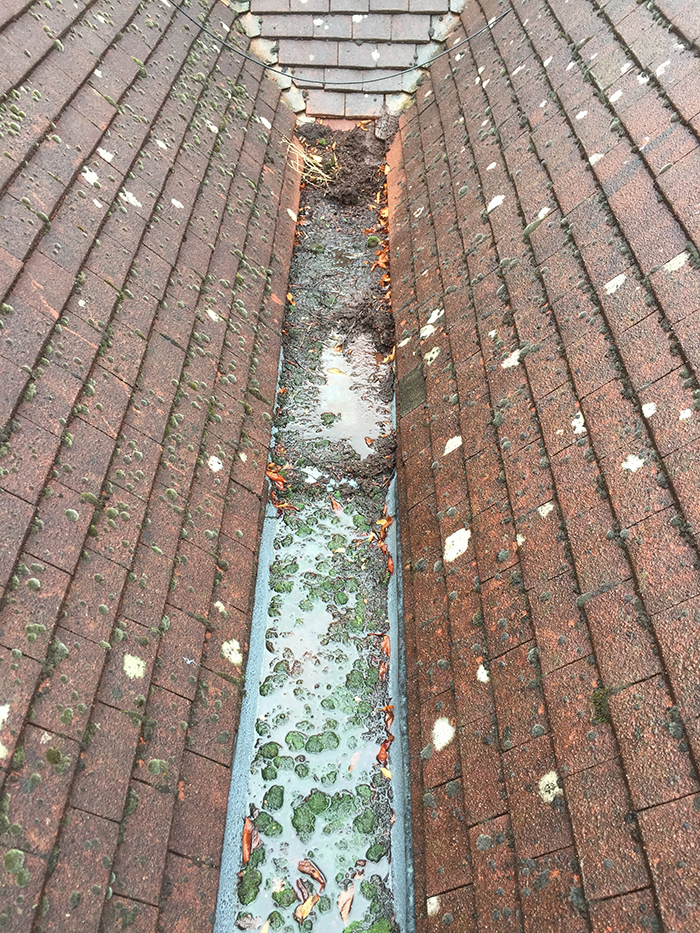
Leaking centre valley gutter in need of repair
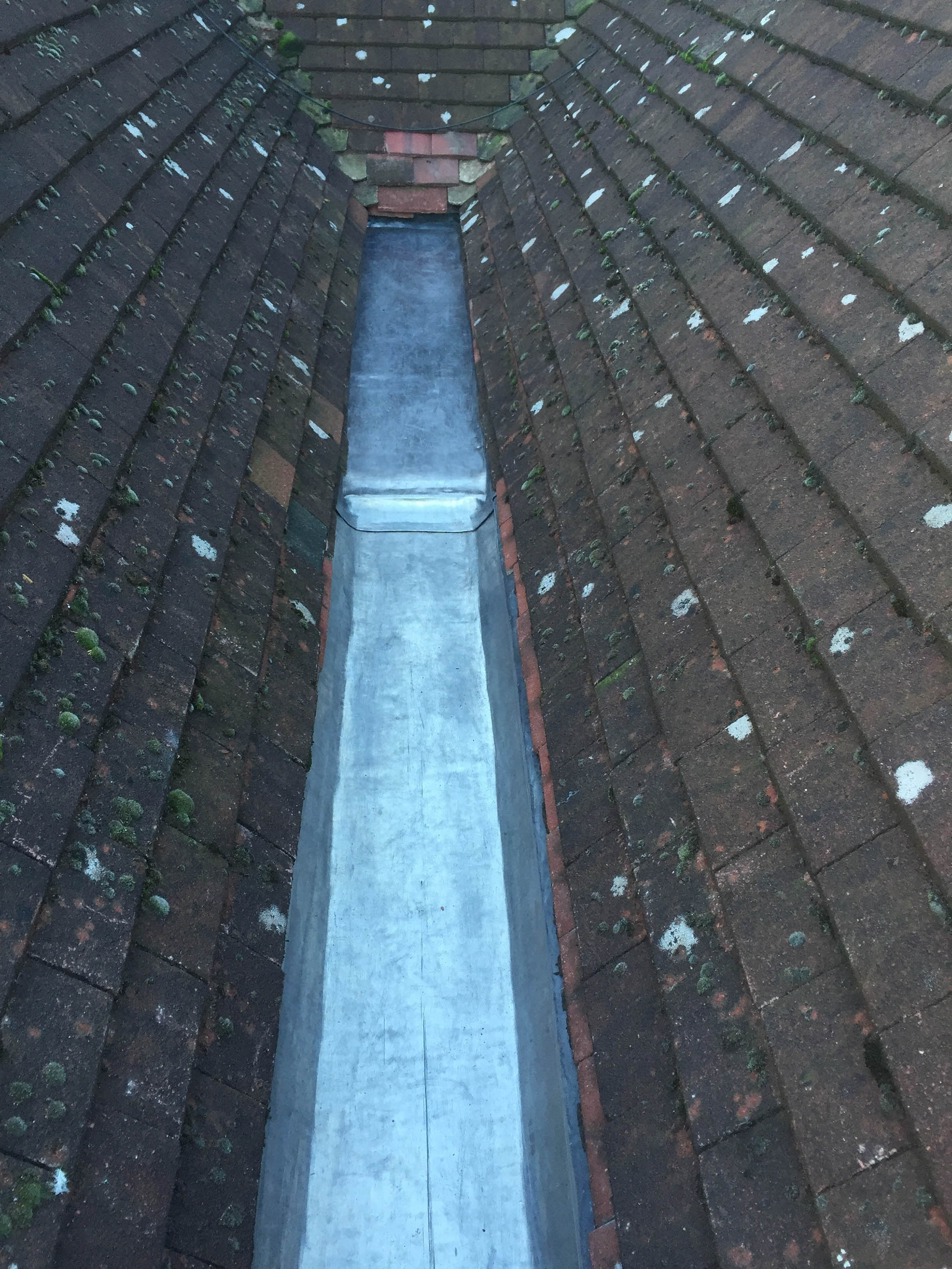
With the edges smoothed out and all renewed in lead
If you are unsure about any of these signs, call us to arrange an inspection. We make a small charge for a general roof inspection.
Dormer constructions
Dormer window with new zinc coating

A natural slate roof weathered and needing replacement
The first photograph shows a weathered natural slate roof in need of replacement. Slate roofs can last for more than 100 years, but eventually the covering and fixings wear out. We stripped the old roof for inspection; the timbers were sound, so none needed replacing, and we topped up the insulation to current LABC requirements. We were able to move stored items around while we worked, so the loft did not need to be emptied completely. The replacement slate closely matches the appearance of Welsh slate, which is useful when adjoining roof areas must match. We also fitted new hips and matching ridge tiles.


The new roof pediment finished
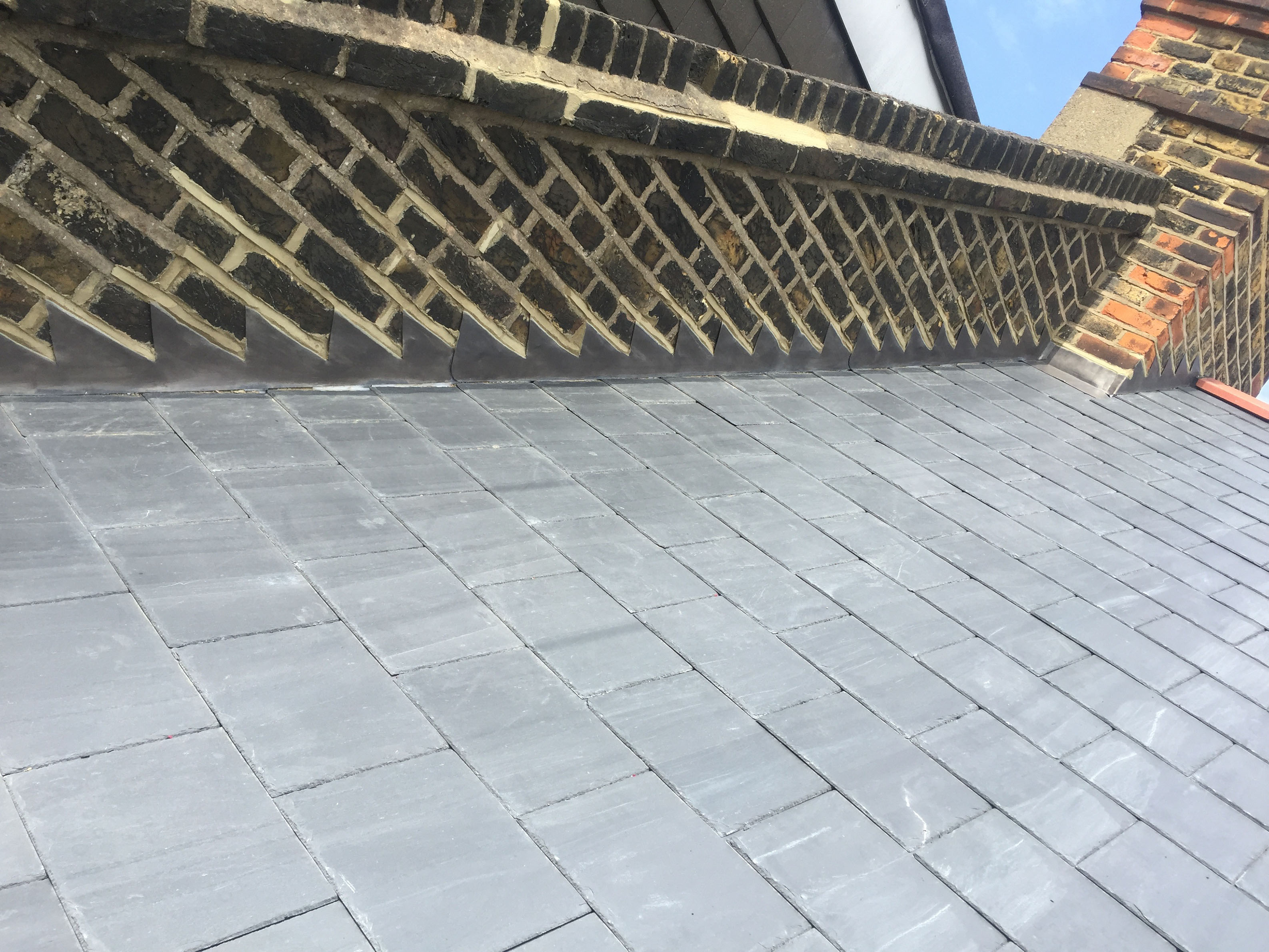
Completed new lead flashing at the base of the wall
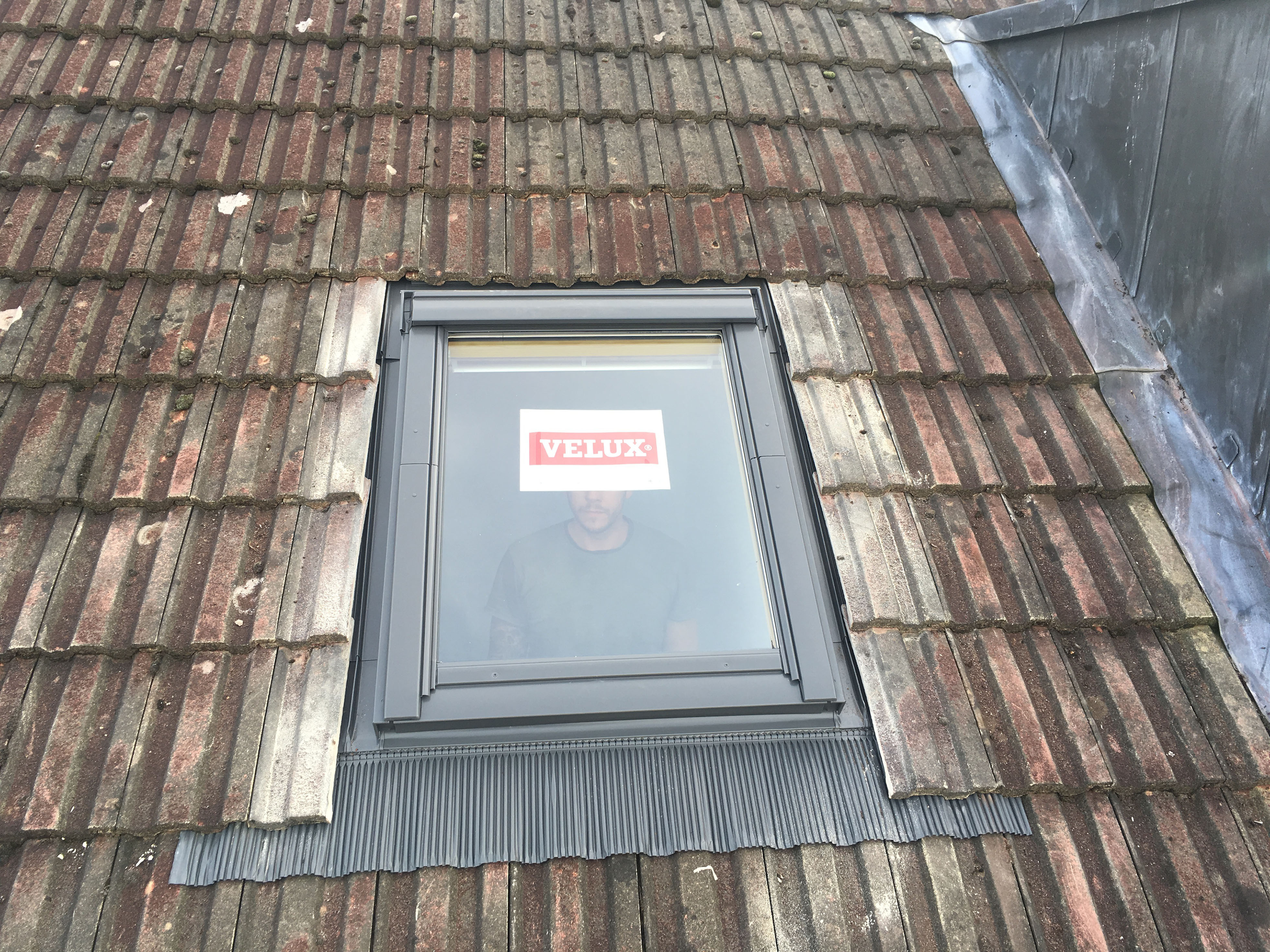
A new VELUX window Deronda Road
Dormer coverings can begin to leak as the zinc ages. In this case, we renewed the zinc and replaced the soaker beneath it. Damp or staining around the internal edges of a dormer can be an early warning sign.

Dormer constructions
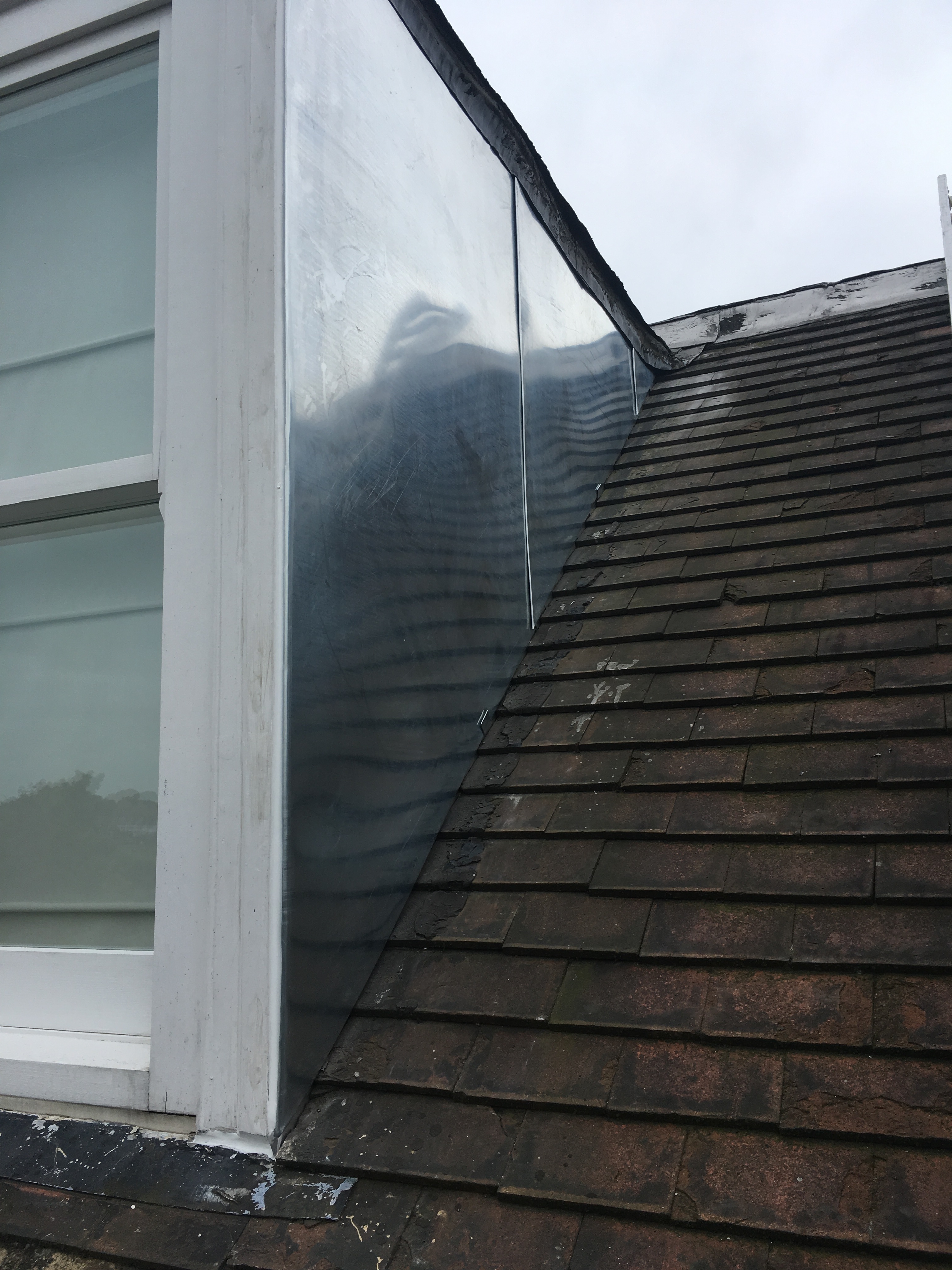
Dormer window with new zinc coating